Nursery textiles and sleep safety
Naturepedic Nursery Textiles: A Guide to Organic Cotton and Breathability
A soft blanket can feel like the very picture of nursery comfort. But when a baby is involved, the details matter: how cotton is woven, how a textile is washed, and—most importantly—whether it belongs in the sleep space at all. Here’s how to understand organic cotton nursery textiles and use them with care.
Published November 15, 2026
Why the fabric and the setting both matter
Nursery textiles are often chosen for the qualities adults can feel straight away: a soft hand, a reassuring weight, a texture that looks inviting folded at the end of a chair. For babies, though, comfort is only one part of the story. The weave, fabric weight, care requirements, and intended use all affect how a textile fits into daily family life.
Organic cotton is one material parents may encounter in blankets, sheets, and other nursery fabrics. The word “organic” describes aspects of how a fiber is grown and processed under a particular certification standard; it does not, on its own, tell you whether an item is suitable for an infant’s sleep space. A certified fabric can be soft and thoughtfully made, but safe use still depends on the baby’s age, the setting, and current pediatric guidance.
That distinction is especially important with blankets. A blanket made from breathable cotton may be useful for supervised cuddling or for keeping a caregiver warm while holding a baby. It is not automatically appropriate to place in a crib, bassinet, or other infant sleep area. Safe-sleep recommendations generally advise keeping loose bedding out of an infant’s sleep space.
Think of nursery textiles in two broad groups: items that add comfort during awake, supervised moments, and items that are appropriate for the baby’s sleep environment. Keeping that difference clear makes it easier to enjoy a fabric’s softness without assuming that softness—or a particular fiber—makes loose bedding safe for sleep.
What “breathable” means in everyday terms
Breathability describes how readily air and water vapor can move through a fabric. In practical terms, a more open construction may feel less dense and allow greater airflow than a tightly compacted fabric of similar fiber. But breathability is not a single, simple performance guarantee. It depends on the yarn, weave or knit, finishing, layers, and how the textile is being used.
A blanket’s construction can change its feel as much as its raw material. A lightweight cotton blanket may feel airy when held in the hand, while a thicker or more densely woven cotton textile may feel warmer and less open. Multiple layers also alter the experience: stacking a blanket over other fabrics changes how air can move and how much warmth is retained.
It is tempting to treat the word “breathable” as a universal safety label. It isn’t. No fabric description removes the need to follow safe-sleep practices. For an infant’s sleep space, the safest approach is to follow current recommendations from trusted pediatric and public-health sources, rather than relying on a textile’s fiber, weave, or marketing language to determine suitability.
For supervised awake use, however, fabric construction can help caregivers choose a textile that feels comfortable for the moment. A lighter, textured cotton layer may be easier to carry than a bulky blanket, and it may feel pleasant across a range of indoor settings. The key is to use it for an appropriate purpose, keep an adult attentive, and avoid letting a comfort item become loose bedding in a baby’s sleep area.
The waffle weave: texture with a practical purpose
A waffle weave is named for its raised, grid-like pattern. The small recessed areas between raised sections give the fabric a distinctive texture, while the construction can create a lighter, more open feel than a smooth, dense cloth. This is one reason waffle cotton appears in blankets and towels: the texture makes the fabric feel different in the hand and gives it a relaxed, tactile look.
Naturepedic’s organic cotton waffle baby blanket offers an example of this kind of nursery textile. Its product description identifies a GOTS-certified organic cotton construction, a textured weave, and a lightweight design. The stated dimensions are approximately 30 by 40 inches, and the care directions specify machine washing warm and tumble drying on low. Those details can help a caregiver understand the blanket’s size, feel, and upkeep.
They do not change the basic safe-sleep distinction. A waffle weave may be breathable as a fabric, but a loose blanket should not be placed in an infant’s sleep area simply because its weave looks open. The product’s suggested uses, such as cuddling or stroller outings, should be understood in context: use it only in an age-appropriate, supervised setting, and follow the stroller manufacturer’s instructions and pediatric guidance. Avoid using any loose textile in a way that could cover a baby’s face or interfere with safe positioning.
For adults shopping for nursery textiles, a useful habit is to separate material questions from safety questions. Ask what the fabric is made from and how it should be cared for; then separately confirm where, when, and how the item may be used. A pleasing texture is a plus, not a substitute for age-appropriate guidance.
Organic cotton: useful information, not a safety shortcut
Organic cotton is valued by many households for its fiber origins and for the way it feels against the skin. Certification can offer a framework for understanding how materials were produced and processed, depending on the standard and the product’s certified components. If that matters to you, read the specific certification details rather than assuming that every part of an item carries the same status.
It is also worth keeping claims in proportion. Organic does not mean that a textile is immune to wear, impossible to irritate sensitive skin, or suitable for every baby. Babies differ, and a caregiver may need to consider a child’s individual skin sensitivities, household laundering products, and any advice from a health professional. Certification is useful information about a product’s materials and production; it is not an individualized medical recommendation.
When evaluating nursery bedding, look beyond a single appealing phrase on a label. Check the fiber content, construction, dimensions, care instructions, and any relevant certification. If a description is unclear, seek clarification from the manufacturer. For infant sleep safety, consult a pediatric professional or a recognized public-health source rather than making a decision based on a product claim.
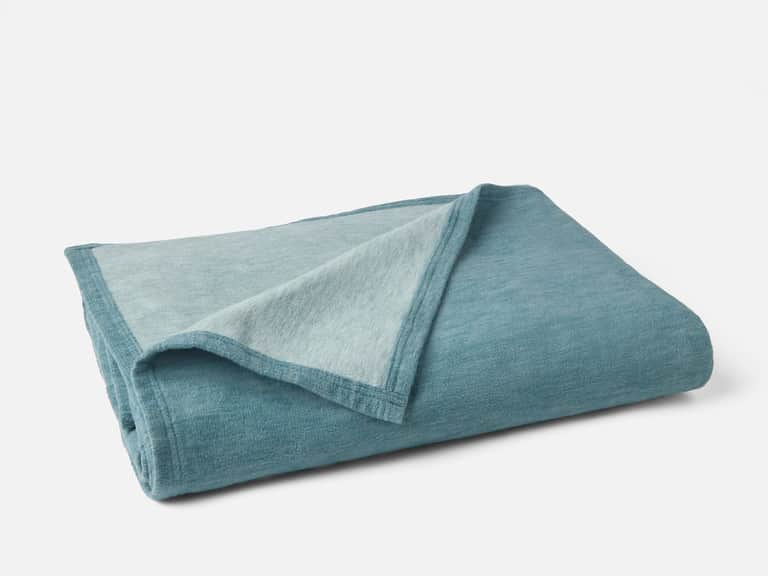
That careful approach can be applied to other cotton textiles, too. For instance, the Cozy Cotton Organic Blanket is described as a 100% organic cotton blanket made with chenille yarn, with a washed finish and a soft-white reverse. It is a general home blanket, not a stated infant sleep product. Its material and care information may be useful to adults considering a cotton layer for supervised, awake use, but it should not be interpreted as a recommendation for use in a baby’s sleep space.
Care labels are part of the comfort story
A textile’s care routine affects how easy it is to keep in rotation, especially in a nursery, where spills and frequent laundering are part of ordinary life. Always check the care label for the specific item you own. General information about a fabric category cannot replace the instructions for an individual blanket, and care directions may vary between products even when both are made from cotton.
For the Naturepedic waffle baby blanket described here, the listed care instructions are machine wash warm, tumble dry low, and do not iron or bleach. Following the manufacturer’s directions can help preserve the fabric’s texture and construction. Use an appropriate detergent, and consider whether fragrances or other laundry additives may bother a baby’s skin; ask a pediatric professional if you have concerns about irritation.
Before washing, check for any damaged seams, loose threads, or changes in the fabric. After laundering, make sure the textile is fully dry before storing it. Keep clean textiles in a dry place, and retire items that are damaged or no longer in good condition. These are straightforward household habits—not special medical measures—but they can make nursery laundry more manageable.
Ease of care may be a deciding factor when choosing a blanket for supervised daytime use. A delicate item with complicated instructions may be less practical for everyday routines, while a machine-washable option can be simpler to maintain. Still, convenience should not determine whether an item is used during sleep. That decision belongs to safe-sleep guidance.
Where a blanket may fit into family routines
There are plenty of moments when a soft textile can be useful without becoming part of an infant’s sleep setup. A caregiver might use a blanket while holding a baby during an awake, supervised cuddle, or bring one along for an outing when the baby is being watched and the blanket is used in line with pediatric and equipment guidance. It can also be kept nearby for an adult’s comfort during feeding or quiet time, provided it stays away from the baby’s face and sleep space.
Keep the practical details in mind. A baby’s position and surroundings matter, and a loose cover should never be left where it can shift over the baby. In a stroller, follow the stroller manufacturer’s safety instructions and ensure that nothing interferes with the harness or airflow. When the baby is asleep, follow current safe-sleep advice rather than relying on a blanket to keep the baby warm.
For sleep, caregivers can ask a pediatric professional about age-appropriate clothing and alternatives designed for the baby’s sleep environment. Wearable sleep garments may be discussed as an alternative to loose blankets, but suitability depends on the individual product, the baby’s age and development, and current guidance. Avoid weighted sleep products for infants unless a qualified health professional gives specific advice; do not assume that a product marketed for comfort is appropriate for a baby.
The simplest rule is also the easiest to remember: use nursery blankets as supervised comfort textiles, not as a reason to add loose bedding to an infant’s sleep space. If you are unsure whether a use is safe, pause and check with a trusted pediatric source.
A clear look at infant sleep safety
Safe-sleep recommendations can be easy to blur with general bedding advice, so it helps to state the distinction plainly. For infant sleep, widely used guidance recommends a firm, flat sleep surface with only a fitted sheet, with the baby placed on their back. Keep soft objects and loose bedding—including blankets, pillows, quilts, and comforters—out of the sleep area. Follow the most current advice from your pediatric clinician and public-health authorities, because guidance may be updated and individual circumstances can differ.
Temperature and clothing are also worth discussing with a child’s health professional. Overheating is a concern, and caregivers should avoid adding loose covers as a way to manage warmth. Ask for guidance on dressing the baby for the room and on what sleep garments are suitable for the baby’s age and stage of development. Do not use a hat indoors during sleep unless a clinician specifically advises it for a medical reason.
Safe-sleep recommendations are not a judgment on a family’s taste or on the quality of a textile. A beautifully made blanket can still have a place in family life; the question is when and how it is used. Keeping a blanket nearby for supervised awake moments is different from putting it into a crib. Clear boundaries help make that difference second nature.
For current details, consult your pediatrician and reputable public-health resources such as the American Academy of Pediatrics or the U.S. National Institutes of Health. If your baby has a medical condition, was born prematurely, or has specific temperature or sleep needs, seek individualized advice from the clinician who knows your child’s health history.
How to compare nursery textiles thoughtfully
When reading a product description, a few focused questions can make the information more useful. Start with the fabric: Is it cotton, a blend, or another fiber? Is the textile woven or knitted, and does the description explain the texture? Then look at the dimensions and weight, where provided, because size and construction affect how a blanket feels and how practical it is to carry or wash.
- Check the exact fiber content. Distinguish 100% cotton from a cotton blend, and look for details about which components are certified.
- Understand the weave and finish. Waffle, muslin, chenille, and smooth cotton can feel quite different. These terms describe textile characteristics, not infant sleep suitability.
- Read the care instructions. Confirm washing temperature, drying method, and any restrictions before putting the item into regular use.
- Consider the intended setting. A blanket described for supervised cuddling is not thereby approved for a crib or bassinet.
- Verify safety separately. Use trusted pediatric guidance for sleep decisions rather than drawing conclusions from words such as “natural,” “organic,” or “breathable.”
These questions are useful for any nursery textile, not just organic cotton. They also help prevent a common mix-up: assuming that because a material sounds gentle, a particular use must be safe. Product information can tell you what an item is made of and how to care for it; infant sleep guidance answers a different question.
A calmer, clearer approach to nursery comfort
Choosing nursery textiles does not have to mean choosing between softness and caution. Organic cotton and a distinctive weave can offer a pleasant feel for supervised, awake moments, while a clear understanding of sleep guidance helps keep the baby’s sleep area appropriately simple. The two ideas work together: enjoy comfort where it belongs, and keep loose bedding out of the infant sleep space.
Naturepedic’s waffle-weave baby blanket illustrates why it is helpful to read a product description closely. The organic cotton construction, textured surface, stated size, and wash instructions each tell caregivers something practical. None of those details, on their own, changes the basic rule about loose blankets during infant sleep.
When in doubt, check the label, consider the setting, and ask a qualified pediatric professional for advice tailored to your child. That small pause can make everyday choices feel more confident—and leave room for the lovely, ordinary parts of nursery life: a soft layer for a supervised cuddle, a freshly washed textile ready for its next daytime use, and a sleep space arranged according to trusted guidance.